China

When Adobe Stopped Flash Content, It Impacted A Chinese Railroad (jalopnik.com) 139

Jalopnik shares a story for our times: Adobe's Flash, the web browser plug-in that powered so very many crappy games, confusing interfaces, and animated icons of the early web like Homestar Runner is now finally gone, after a long, slow, protracted death. For most of us, this just means that some goofy webgame you searched for out of misplaced nostalgia will no longer run. For a select few in China, though, the death of Flash meant being late to work, because the city of Dalian in northern China was running their railroad system on it.

Yes, a railroad, run on Flash, the same thing used to run "free online casinos" and knockoff Breakout games in mortgage re-fi ads...

Hell, YouTube used to run on Flash until 2015. It wasn't all stupid little web games but, that said, I can't for the life of me fathom why anyone would want to run a freaking railroad network on it, with physical, multi-ton moving railcars full of human beings on it. So, when Adobe finally killed Flash-based content from running, this Tuesday Dalian's railroad network found itself ground to a halt for 20 hours.

The railroad's technicians did get everything back up and running, but the way they did this is fascinating, too. They didn't switch the rail management system to some other, more modern codebase or software installation; instead, they installed a pirated version of Flash that was still operational. The knockoff version seems to be known as "Ghost Version." This, along with installing an older version of the Flash player to work with the knockoff Flash server setup, "solved" the problem, and the railroad was back up and running.

UPDATE: ZDNet reports that "later reports from Chinese media clarified that railway traffic never stopped in Dalian because of the Flash end-of-life": However, the reports also admitted that there's some truth in the original report and that, indeed, some internal traffic statistics system had stopped working at the rail station on Jan. 12, when Adobe blocked Flash content from working.
Google

'Google is Getting Left Behind Due To Horrible UI/UX' (danielmiessler.com) 269

Daniel Miessler, a widely respected infosec professional in San Francisco, writes about design and user experience choices Google has made across its services in recent years: I've been writing for probably a decade about how bad Google's GUI is for Google Analytics, Google Apps, and countless of their other properties -- not to mention their multiple social media network attempts, like Google+ and Wave. Back then it was super annoying, but kind of ok. They're a hardcore engineering group, and their backend services are without equal. But lately it's just becoming too much.

1. Even Gmail is a cesspool at this point. Nobody would ever design a webmail interface like that, starting from scratch.
2. What happened to Google Docs? Why does it not look and behave more like Notion, or Quip, or any of the other alternatives that made progress in the last 5-10 years?
3. What college course do I take to manage a Google Analytics property?
4. Google just rolled out Google Analytics 4 -- I think -- and the internet is full of people asking the same question I am. "Is this a real rollout?"

[...] My questions are simple:
1. How the hell is this possible? I get it 10 years ago. But then they came out with the new design language. Materialize, or whatever it was. Cool story, and cool visuals. But it's not about the graphics, it's about the experience.
2. How can you be sitting on billions of dollars and be unable to hire product managers that can create usable interfaces?
3. How can you run Gmail on an interface that's tangibly worse than anything else out there?
4. How can you let Google Docs get completely obsoleted by startups?

I've heard people say that Google has become the new Microsoft, or the new Oracle, but damn -- at least Microsoft is innovating. At least Oracle has a sailing team, or whatever else they do. I'm being emotional at this point.

Google, you are made out of money. Fix your fucking interfaces. Focus on the experience. Focus on simplicity. And use navigation language that's similar across your various properties, so that I'll know what to do whether I'm managing my Apps account, or my domains, or my Analytics. You guys are awesome at so many things. Make the commitment to fix how we interact with them.

Windows

Microsoft's 'Project Latte' Aims To Bring Android Apps To Windows 10 (windowscentral.com) 65

Windows Central reports: Microsoft is working on a software solution that would allow app developers to bring their Android apps to Windows 10 with little to no code changes by packaging them as an MSIX and allowing developers to submit them to the Microsoft Store. According to sources familiar with the matter, the project is codenamed 'Latte' and I'm told it could show up as soon as next year. The company has toyed with the idea of bringing Android apps to Windows 10 before via a project codenamed Astoria that never saw the light of day. Project Latte aims to deliver a similar product, and is likely powered by the Windows Subsystem for Linux (WSL.) Microsoft will need to provide its own Android subsystem for Android apps to actually run, however.

Microsoft has announced that WSL will soon get support for GUI Linux applications, as well as GPU acceleration which should aid the performance of apps running through WSL. It's unlikely that Project Latte will include support for Play Services, as Google doesn't allow Play Services to be installed on anything other than native Android devices and Chrome OS. This means that apps which require Play Services APIs will need to be updated to remove those dependencies before they can be submitted on Windows 10.

X

Graphical Linux Apps Are Coming to Windows Subsystem for Linux (zdnet.com) 89

ZDNet reports: At the Microsoft Build 2020 virtual developers' conference, CEO Satya Nadella announced that Windows Subsystem for Linux (WSL) 2.0 would soon support Linux GUIs and applications. That day is closer now than ever before. At the recent X.Org Developers Conference, Microsoft partner developer lead Steve Pronovost revealed that Microsoft has made it possible to run graphical Linux applications within WSL.

It's always been possible to run Linux graphical programs such as the GIMP graphics editor, Evolution e-mail client, and LibreOffice on WSL. But it wasn't easy. You had to install a third-party X Window display server, such as the VcXsrv Windows X Server in Windows 10, and then do some tuning with both Windows and Linux to get them to work together smoothly. The X Window System underlies almost all Linux graphical user interfaces. Now, Microsoft has ported a Wayland display server to WSL. Wayland is the most popular X Window compatible server. In WSL2, it connects the graphical Linux applications via a Remote Desktop Protocol (RDP) connection to the main Windows display. This means you can run Linux and Windows GUI applications simultaneously on the same desktop screen....

Craig Loewen, Microsoft WSL Program Manager, added in a Twitter thread that the key differences between using a third-party X server and the built-in Wayland server is that: "You don't need to start up or start the server, we'll handle that for you." In addition, it comes with "Lovely integration with Windows," such as drop shadows and Linux icon support. Loewen also said you can run a Linux web browser in it. "We haven't tested it extensively with a full desktop environment yet, as we want to focus on running often asked for apps first, and primarily IDEs [integrated development environment] so you can run those in a full Linux environment," he said.

Don't get too excited about it just yet, though. Loewen continued, "We don't yet have an ETA for the beta channel, however, this work will be available in general for Insiders to try within the next couple of months."

GNU is Not Unix

Emacs Developers (Including Richard Stallman) Discuss How to Build a More 'Modern' Emacs (lwn.net) 172

LWN.net re-visits the emacs-devel mailing list, where the Emacs 28 development cycle has revived discussions about how to make the text editor more "modern" and attractive to new users: A default dark theme may not be in the future, leading one to think that there may yet be hope for the world in general. But there does seem to be general agreement that Emacs could benefit from a better, more centralized approach to color themes, rather than having color names hard-coded throughout various Elisp packages. From that, a proper theme engine could be supported, making dark themes and such easily available to those who want them...

Another area where Emacs is insufficiently "modern", it seems, has to do with keyboard and mouse bindings. On the keyboard side, users have come to expect certain actions from certain keystrokes; ^X to cut a selection, ^V to paste it, etc. These bindings are easily had by turning on the Cua mode, but new users tend not to know about this mode or how to enable it. Many participants in the discussion said that this mode should be on by default. That, of course, would break the finger memory of large numbers of existing Emacs users, who would be unlikely to appreciate the disruption. Or, as Richard Stallman put it:

It is not an option to change these basic key bindings to imitate other, newer editors. It would create a different editor that we Emacs users would never switch to. It is unfortunate that the people who implemented the newer editors chose incompatibility with Emacs....

The situation with mouse behavior is similar; as several participants in the discussion pointed out, users of graphical interfaces have come to expect that a right-button click will produce a menu of available actions. In Emacs, instead, that button marks a region ("selection"), with a second click in the same spot yanking ("cutting") the selected text. Many experienced Emacs users have come to like this behavior, but it is surprising to newcomers. The right mouse button with the control key held down does produce a menu defined by the current major mode, but that is evidently not what is being requested here; that menu, some say, should present global actions rather mode-specific ones.

Stallman suggested offering a "reshuffled mode" that would bring the context menu to an unadorned right-button click, and which would add some of the expected basic editing commands there as well. This would be relatively easy to do, he said, since mouse bindings are separate from everything else. Besides, as he noted, the current mouse behavior was derived from "what was the standard in X Windows around 1990"; while one wouldn't want to act in haste, it might just be about time for an update.

Other proposed changes involved "discoverability," including the default enabling of various modes, although to incorporate them into GNU Emacs "would often require the author to sign copyrights over to the Free Software Foundation, which is not something all authors are willing to do..."
Microsoft

Windows 95 Released a Quarter Century Ago (wikipedia.org) 108

New submitter bondman writes: Windows 95 was released a full quarter century ago today, on August 24th, 1995. Long gone, nearly forgotten? I'm surprised to not have come across a retrospective article yet. I've linked to the Wikipedia article.

As for me I still haven't grown to re-like The Rolling Stones "Start Me Up" yet. I got so sick of hearing it with all the pre-launch and post-launch hype, as the song was tied heavily to the Win 95 launch event. Microsoft paid the Stones a princely sum to use it.

I still remember how exciting it was to see the full-length, full-screen video included on the installation CD-ROM, "Buddy Holly" by Weezer. Mind-blowing to watch a whole music video on your computer. Crappy resolution by our standards today, and a very limited palette to my memory. But as I said, amazing in the day.

Windows 95 had many fans and many critics. At the time, I recall it as an exciting OS (or GUI on top of DOS, if you prefer). PC users were riveted to all the magazine and other media coverage pre-launch. I remember it fondly (with all the obligatory respect due Mac OS, the Amiga, and all the other early GUIs of course).

Windows

Windows 10 Linux Subsystem: You Get GPU Acceleration -- With Intel, AMD, Nvidia Drivers (zdnet.com) 56

Nvidia, Intel and AMD have announced their support for Microsoft's new effort to bring graphics processor support to the Windows 10 Windows Subsystem for Linux to enhance machine-learning training. From a report: GPU support for WSL arrived on Wednesday in the Dev Channel preview of Windows 10 build 20150 under Microsoft's reorganized testing structure, which lets it test Windows 10 builds that aren't tied to a specific future feature release. Microsoft announced upcoming GPU support for WSL a few weeks ago at Build 2020, along with support for running Linux GUI apps. The move on GPU access for WSL is intended to bring the performance of applications running in WSL2 up to par with those running on Windows. GPU compute support is the feature most requested by WSL users, according to Microsoft. The 20150 update includes support for Nvidia's CUDA parallel computing platform and GPUs, as well as GPUs from AMD and Intel. It also supports DirectML (Direct Machine Learning), Microsoft's Windows 10 API for hardware-accelerated machine learning.
Microsoft

Microsoft Debuts Windows Package Manager For Your Dev Environment (venturebeat.com) 50

An anonymous reader quotes a report from VentureBeat: It's finally happening. Microsoft is giving developers a command line interface to install their favorite tools. That's right -- at Build 2020 today, Microsoft announced Windows Package Manager in preview. This is not simply about helping developers build for Windows. It's about helping developers and businesses embrace Windows. Microsoft is on a mission to get developers to love using Windows over macOS and Linux. Part of that mission involves releasing tools like Windows Terminal for enterprises and improving WSL for anyone who needs Linux while they code. Another part is helping developers (and IT admins) set up their Windows environments as effortlessly as possible. In a similar vein, Microsoft today also threw in highly requested features for PowerToys: Run and Keyboard Remapper. But the former is definitely the bigger news.

Windows Package Manager is a command line interface for searching, viewing, and installing commonly used developer tools. Developers list their applications in a GitHub repository; the package manager grabs and installs them. Even better, Windows Package Manager is open source -- Microsoft is asking for developers to help improve it.

Microsoft

Microsoft Launches Windows Terminal 1.0, Unveils GPU Support and Linux GUI Apps in WSL (venturebeat.com) 117

At Build 2020 today, Microsoft gave developers a slew of new tools to coax them into using Windows over macOS or Linux. From a report: Windows Terminal is now out of preview for enterprises, and Windows Subsystem for Linux (WSL) 2 is getting support for GPUs, Linux GUI apps, and a simplified install experience. Microsoft even released a Windows Package Manager in preview. Windows 10 runs on 1 billion monthly active devices (PCs, Xbox One consoles, and HoloLens devices), making it a massive platform for developers to target. [...] Microsoft today released Windows Terminal 1.0, which means it is stable for enterprise use. The open source application features multiple tabs, panes, tear-away windows, shortcuts, Unicode and UTF-8 character support, emojis, ligatures, extensions, GPU-accelerated text rendering engine, and custom themes, styles, and configurations. Windows Terminal is for users of PowerShell, Cmd, WSL, and other command-line tools. Microsoft also unveiled WSL improvements today, including support for GPUs, Linux GUI apps, and a simplified install experience. WSL is a compatibility layer for running Linux binary executables natively on Windows. Microsoft first shared it was working on WSL 2 a year ago at Build 2019. WSL 2 is slated to arrive in the next major Windows 10 update coming later this month (brilliantly called the Windows 10 May 2020 Update), but it won't have these new features. In the second half of the year, WSL 2 will get support for GPU compute workflows.
The Internet

Are We on the Cusp of a Metaverse, the Next Version of the Internet? (washingtonpost.com) 69

The Washington Post describes it as "the next internet." Wikipedia defines it as "a collective virtual shared space...including the sum of all virtual worlds, augmented reality, and the Internet." But it was Neal Stephenson who named it "the metaverse" in his 1992 science fiction novel Snow Crash.

Are we closer to seeing it happen? The Washington Post reports: In the past month, office culture has coalesced around video chat platforms like Zoom, while personal cultural milestones like weddings and graduations are being conducted in Nintendo's Animal Crossing: New Horizons. The Metaverse not only seems realistic — it would probably be pretty useful right about now. The Metaverse reality is still years, possibly decades, away. But Epic Games CEO Tim Sweeney has been publicly pushing for its creation, and he isn't alone in his desire to push for the Metaverse, where the online world echoes and fulfills real-world needs and activities. Constructing the virtual Internet space is Silicon Valley's macro goal, many of whom are obsessed with Neal Stephenson's 1992 book, "Snow Crash," which defined the term.

In recent years, Facebook, Google and Samsung have all made heavy investments in cloud computing and virtual reality companies in anticipation of a Metaverse... But it's Epic Games, with Fortnite, that has the most viable path forward in terms of creating the Metaverse, according to an essay by venture capitalist and former Amazon executive Matthew Ball... [The article also notes other "traits" of the metaverse in Minecraft and Roblox.] The most widely agreed core attributes of a Metaverse include always being live and persistent — with both planned and spontaneous events always occurring — while at the same time providing an experience that spans and operates across platforms and the real world. A Metaverse must also have no real cap on audience, and have its own fully functioning economy... Fortnite hasn't reached Metaverse status yet. But Fortnite as a social network and impossible-to-ignore cultural phenomenon, Ball says, provides Epic Games a key advantage for leading in the Metaverse race. Fortnite draws a massive, willing and excited audience online to engage with chaotically clashing intellectual properties... "This organic evolution can't be overemphasized," Ball writes in his essay. "If you 'declared' your intent to start a Metaverse, these parties would never embrace interoperability or entrust their IP. But Fortnite has become so popular and so unique that most counterparties have no choice but to participate... Fortnite is too valuable a platform...."

The current swarm to an online-only social and capitalist economy has only highlighted the current Internet's failings, and what the Metaverse needs to do, Ball said. Big sites like Facebook, Google and Amazon continue to dominate online activity, as do larger streaming services like YouTube and Netflix. But each location requires its own membership and has separate ecosystems. "Right now, the digital world basically operates as though every restaurant and bar you go to requires a different ID card, has a different currency, requires their own dress codes and has their own units [of service and measurement]," Ball said. "It is clear that this really advantages the biggest services. People are just sticking to the big games, really. However there's a clear argument that reducing network lock-in can really raise all boats here."

Sweeney said as much in his DICE Summit keynote speech February. If the game industry wants to reshape the Internet and move away from Silicon Valley's walled gardens, Sweeney stressed that publishers need to rethink economies in the same way email was standardized... "We need to give up our attempts to each create our own private walled gardens and private monopoly and agree to work together and recognize we're all far better off if we connect our systems and grow our social graphs together.

Neal Stephenson answered questions from Slashdot readers back in 2004.
Piracy

The Pirate Bay Blocked By MalwareBytes But Normal Service Will Be Resumed (torrentfreak.com) 16

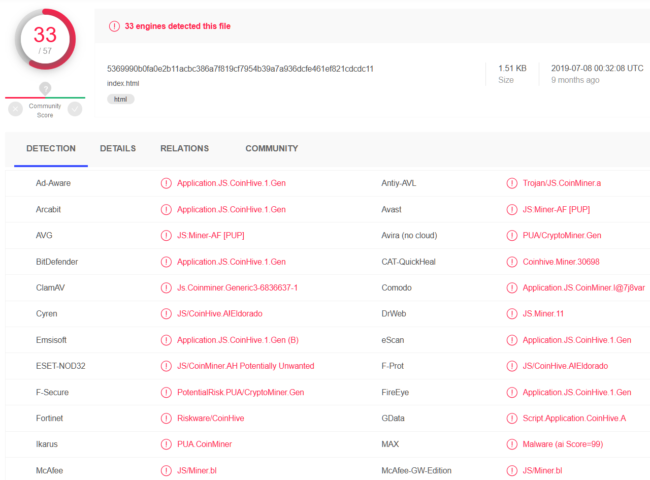
The Pirate Bay returned to the clear web this week after a month-long hiatus. However, the structure of the infamous torrent index presented an access problem to users of the popular anti-malware software MalwareBytes, which persistently blocked an essential element of the platform due to the presence of "a few" cryptocurrency miners on a secondary domain. TorrentFreak reports: The problem lay in The Pirate Bay's setup. Aside from cosmetic changes to some pages, the site sends requests to another domain (apibay.org) in order to present torrents to the user on thepiratebay.org. However, those accessing the main domain with Malwarebytes installed were greeted with blank torrent pages after the security software blocked apibay.org. Any warning of this type, especially concerning trojans, should be of concern to users of any site. However, dumping trojans on users hasn't been the modus operandi of The Pirate Bay thus far, so TorrentFreak contacted Malwarebytes to find out what was causing the alert.

Manager of WebProtection Labs at MalwareBytes Andres Ortiz informs TorrentFreak that the issue was caused by the presence of "a few" cryptocurrency miners, not on thepiratebay.org, but on a sub-directory of apibay.org, the domain from where TPB appears to present its torrent results. The analysis for just one example miner is shown [here]. After examining the apibay.org domain once again, MalwareBytes has now confirmed that the miners have been removed so in response, they will push an update to their users to stop TPB's indexes from being blocked moving forward. However, if any party reintroduces the miners, it's certainly possible that the site will be rendered inaccessible once again.

Open Source

Open Source Advocates Hope They Don't Have to Fork Qt (phoronix.com) 137

Phoronix reports on a new concern about Qt, the free and open-source widget toolkit for creating GUIs and cross-platform applications: Wednesday a KDE developer who serves on the board of the KDE Free Qt Foundation commented that The Qt Company is evaluating restricting new releases to paying customers for 12 months. That was said to be under consideration due to COVID19 / coronavirus impacting their finances and needing to boost short-term revenues... [Slashdot editor's note: the comment also claims the Qt Company "says that they are willing to reconsider the approach only if we offer them concessions in other areas."] This comes months after The Qt Company already shifted to make Qt long-term support releases customer-only, among other steps to boost their commercial business at the beginning of the year.

Following all the speculation and concerns from the statement by KDE's Olaf Schmidt-Wischhöfer, The Qt Company released this very brief statement:

There have been discussions on various internet forums about the future of Qt open source in the last two days. The contents do not reflect the views or plans of The Qt Company.

The Qt Company is proud to be committed to its customers, open source, and the Qt governance model.

But in the event of a one-year freeze on free releases, Phoronix now reports, "several individuals and projects are already expressing interest in a Qt fork should it come to it." The hope is first and foremost that The Qt Company and KDE / KDE Free Qt Foundation can reach a mutual agreement without this embargo on future releases, which would effectively close up its development... Among those backing the concept of forking Qt as a last resort if necessary has been developers from consulting firm KDAB, the Qute browser developer, and the QGIS project as one of the leading geographic information system software packages, among many KDE developers themselves.

The mailing list thread is quite active in talking about the possible fork if necessary, including aspects like web-hosting down to what such a fork should be called ("Kt" seems to be a popular choice so far with several different members in the community).

Security

Hackers Hijack Routers' DNS To Spread Malicious COVID-19 Apps (bleepingcomputer.com) 13

An anonymous reader quotes a report from Bleeping Computer: A new cyber attack is hijacking router's DNS settings so that web browsers display alerts for a fake COVID-19 information app from the World Health Organization that is the Oski information-stealing malware. For the past five days, people have been reporting their web browser would open on its own and display a message prompting them to download a 'COVID-19 Inform App' that was allegedly from the World Health Organization (WHO). After further research, it was determined that these alerts were being caused by an attack that changed the DNS servers configured on their home D-Link or Linksys routers to use DNS servers operated by the attackers. As most computers use the IP address and DNS information provided by their router, the malicious DNS servers were redirecting victims to malicious content under the attacker's control. "If your browser is randomly opening to a page promoting a COVID-19 information app, then you need to login to your router and make sure you configure it to automatically receive its DNS servers from your ISP," the report says. It also recommends you set a strong password for your router and to disable remote administration.

"Finally, if you downloaded and installed the COVID-19 app, you should immediately perform a scan on your computer for malware. Once clean, you should change all of the passwords for sites whose credentials are saved in your browser and you should change the passwords for any site that you visited since being infected."
Medicine

Open-Source Project Spins Up 3D-Printed Ventilator Validation Prototype In Just One Week (techcrunch.com) 48

An anonymous reader quotes a report from TechCrunch: In a great example of what can happen when smart, technically-oriented people come together in a time of need, an open-source hardware project started by a group including Irish entrepreneur Colin Keogh and Breeze Automation CEO and co-founder Gui Calavanti has produced a prototype ventilator using 3D-printed parts and readily available, inexpensive material. The ventilator prototype was designed and produced in just seven days, after the project spun up on Facebook and attracted participation from over 300 engineers, medical professionals and researchers.

The prototype will now enter into a validation process by the Irish Health Services Executive (HSE), the country's health regulatory body. This will technically only validate it for use in Ireland, which ironically looks relatively well-stocked for ventilator hardware, but it will be a key stamp of approval that could pave the way for its deployment across countries where there are shortages, including low-income nations. The group behind the ventilator also recently changed the focus of their Facebook community, renaming the group from the Open Source Ventilator Project to the Open Source COVID19 Medical Supplies community. They're looking at expanding their focus to finding ways to cheaply and effectively build and validate other needed equipment, including protective gear like masks, sanitizer and protective face guards for front-line healthcare workers.

KDE

KDE Plasma 5.18 Released (kde.org) 15

jrepin writes: The KDE community today announced the release of Plasma 5.18. This version of the popular desktop environment is the latest long-term supported release and brings an emoji selector, user feedback capabilities, a global edit mode, and improvements to System Settings, the Discover software manager, widgets, GTK integration and much more. The full Plasma 5.18.0 changelog is available here.
AI

Video Leaks From Samsung's 'Artificial Human' Avatar Project Neon (theverge.com) 39

The Verge has been investigating Samsung's "artificial human" project Neon, which seems to be about creating realistic human avatars: A tweet from the project's lead and some leaked videos pretty much confirm this -- although they don't give us nearly enough information to judge how impressive Neon is. The lead of Neon, computer-human interaction researcher Paranav Mistry, tweeted this image, apparently showing one of the project's avatars. Mistry says the company's "Core R3" technology can now "autonomously create new expressions, new movements, new dialog (even in Hindi), completely different from the original captured data...."

In a recent interview, Mistry made clear he thinks "digital humans" will be a major technology in the 2020s... "While films may disrupt our sense of reality, 'virtual humans' or 'digital humans' will be reality. A digital human could extend its role to become a part of our everyday lives: a virtual news anchor, virtual receptionist, or even an AI-generated film star."

Reddit users also found the URLs for videos in the source code on Neon's home page -- and though the videos have since been removed, some of the footage has been archived and analyzed on YouTube.
Security

Most System Administrators Prefer Firewall GUIs Over CLIs (zdnet.com) 159

When it comes to firewalls, most system administrators prefer to use a graphical user interface (GUI) rather than a command-line interface (CLI), a new academic study published over the summer has revealed. From a report: Despite the many preconceptions that system administrators are almost all ardent CLI users, firewall GUIs won by a pretty large margin in a survey compiling results from more than 300 respondents. Almost 60% of sysadmins said they "preferred" GUIs over CLIs, and 70% said they "used" GUIs on a daily basis. The survey showed that while CLIs might be popular in some circles, they are not the most ideal interface for managing a complex security software suite like a firewall. The survey, which included more than 15 questions that also sought to discover the reasoning behind each answer, revealed that "usability" was the main reason why system administrators tended to prefer and use firewalls more than CLIs.
Security

Ransomware Gang's Victim Cracks Their Server and Releases All Their Decryption Keys (zdnet.com) 55

"A user got his revenge on the ransomware gang who encrypted his files by hacking their server and releasing the decryption keys for all victims," writes ZDNet.

ccnafr shared their report: One of the gang's victims was Tobias Frömel, a German software developer. Frömel was one of the victims who paid the ransom demand so he could regain access to his files. However, after paying the ransom, Frömel also analyzed the ransomware, gained insight into how Muhstik operated, and then retrieved the crooks' database from their server. "I know it was not legal from me," the researcher wrote in a text file he published online on Pastebin earlier Monday, containing 2,858 decryption keys. "I'm not the bad guy here," Frömel added.

Besides releasing the decryption keys, the German developer also published a decrypter that all Muhstik victims can use to unlock their files. The decrypter is available on MEGA [VirusTotal scan], and usage instructions are avaiable on the Bleeping Computer forum.

In the meantime, Frömel has been busy notifying Muhstik victims on Twitter about the decrypter's availability, advising users against paying the ransom.

Amiga

Ask Slashdot: What Would Computing Look Like Today If the Amiga Had Survived? 221

dryriver writes: The Amiga was a remarkable machine at the time it was released -- 1985. It had a multitasking capable GUI-driven OS and a mouse. It had a number of cleverly designed custom chips that gave the Amiga amazing graphics and sound capabilities far beyond the typical IBM/DOS PCs of its time. The Amiga was the multimedia beast of its time -- you could create animated and still 2D or 3D graphics on it, compose sophisticated electronic music, develop 2D or 3D 16-Bit games, edit and process digital video (using Video Toaster), and of course, play some amazing games. And after the Amiga -- as well as the Atari ST, Archimedes and so on -- died, everybody pretty much had to migrate to either the PC or Mac platforms. If Commodore and the Amiga had survived and thrived, there might have been four major desktop platforms in use today: Windows, OSX, AmigaOS and Linux. And who knows what the custom chips (ASICs? FPGAs?) of an Amiga in 2019 might have been capable of -- Amiga could possibly have been the platform that makes nearly life-like games and VR/AR a reality, and given Nvidia and AMD's GPUs a run for their money.

What do you think the computing landscape in 2019 would have looked like if the Amiga and AmigaOS as a platform had survived? Would Macs be as popular with digital content creators as they are today? Would AAA games target Windows 7/8/10 by default or tilt more towards the Amiga? Could there have been an Amiga hardware-based game console? Might AmigaOS and Linux have had a symbiotic existence of sorts, with AmigOS co-existing with Linux on many enthusiast's Amigas, or even becoming compatible with each other over time?
Open Source

Landmark 2.80 Release of Open Source Blender 3D With Improved UI Now Available (blender.org) 67

"In the 3D content creation space, where are lot of professional 3D software costs anywhere from 2K to 8K Dollars a license, people have always hoped that the free, open source 3D software Blender would some day be up to the job of replacing expensive commercial 3D software packages," writes Slashdot reader dryriver: This never happened, not because Blender didn't have good 3D features technically, but rather because the Blender Foundation simply did not listen to thousands of 3D artists screaming for a "more standard UI design" in Blender. Blender's eccentric GUI with reversed left-click-right-click conventions, keyboard shortcuts that don't match commercial software and other nastiness just didn't work for a lot of people.

After years of screaming, Blender finally got a much better and more familiar UI design in release 2.80, which can be downloaded here. Version 2.80 has many powerful features, but the standout feature is that after nearly 10 years of asking, 3D artists finally get a better, more standard, more sensible User Interface. This effectively means that for the first time, Blender can compete directly with expensive commercial 3D software made by industry leaders like Autodesk, Maxon, NewTek and SideFX.

Why the Blender Foundation took nearly a decade to revise the software's UI is anybody's guess.

Slashdot Top Deals